

Book I / The Record
Carpooling to Hell
The personal record: a father’s experience inside Maine’s family courts.
JTforME / Author & Books
Books. Documentary writing.
Public accountability.
Personal experience. Institutional criticism. The record behind the argument. Explore two distinct series, the free book, and the work that connects them.
Series 01 / Three books by Justin A. Tahai
The record. The indictment. The adversarial test.
Three books built from one long record — and one father who just wanted to be a father. Start with the personal history, move into the institutional argument, then put that argument to the test.
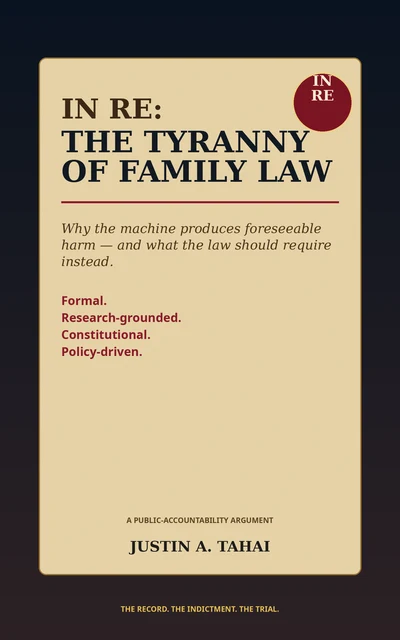
Book I / The Record
The personal record: a father’s experience inside Maine’s family courts.
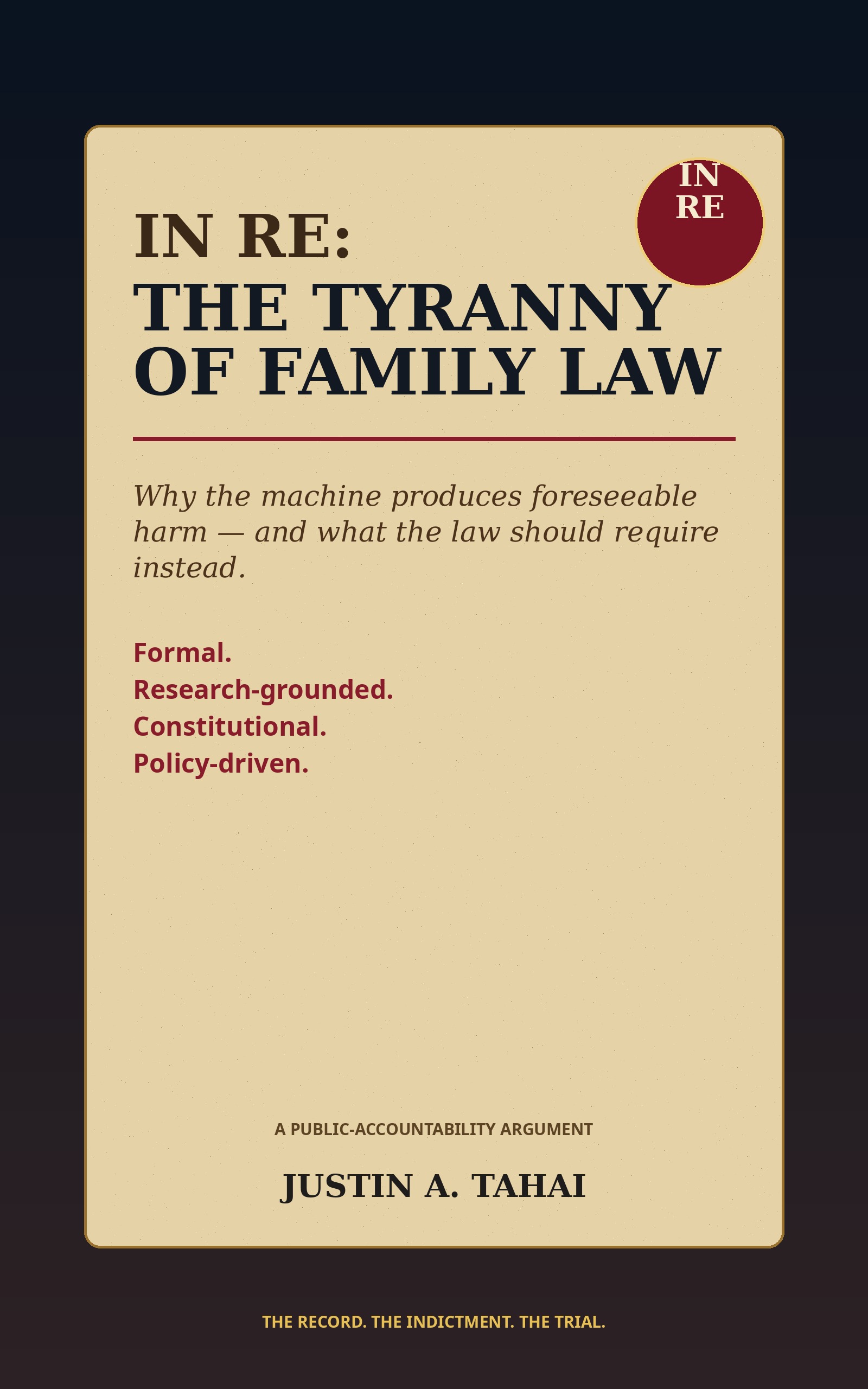
Book II / The Indictment
The indictment: a formal, research-grounded argument for institutional change.
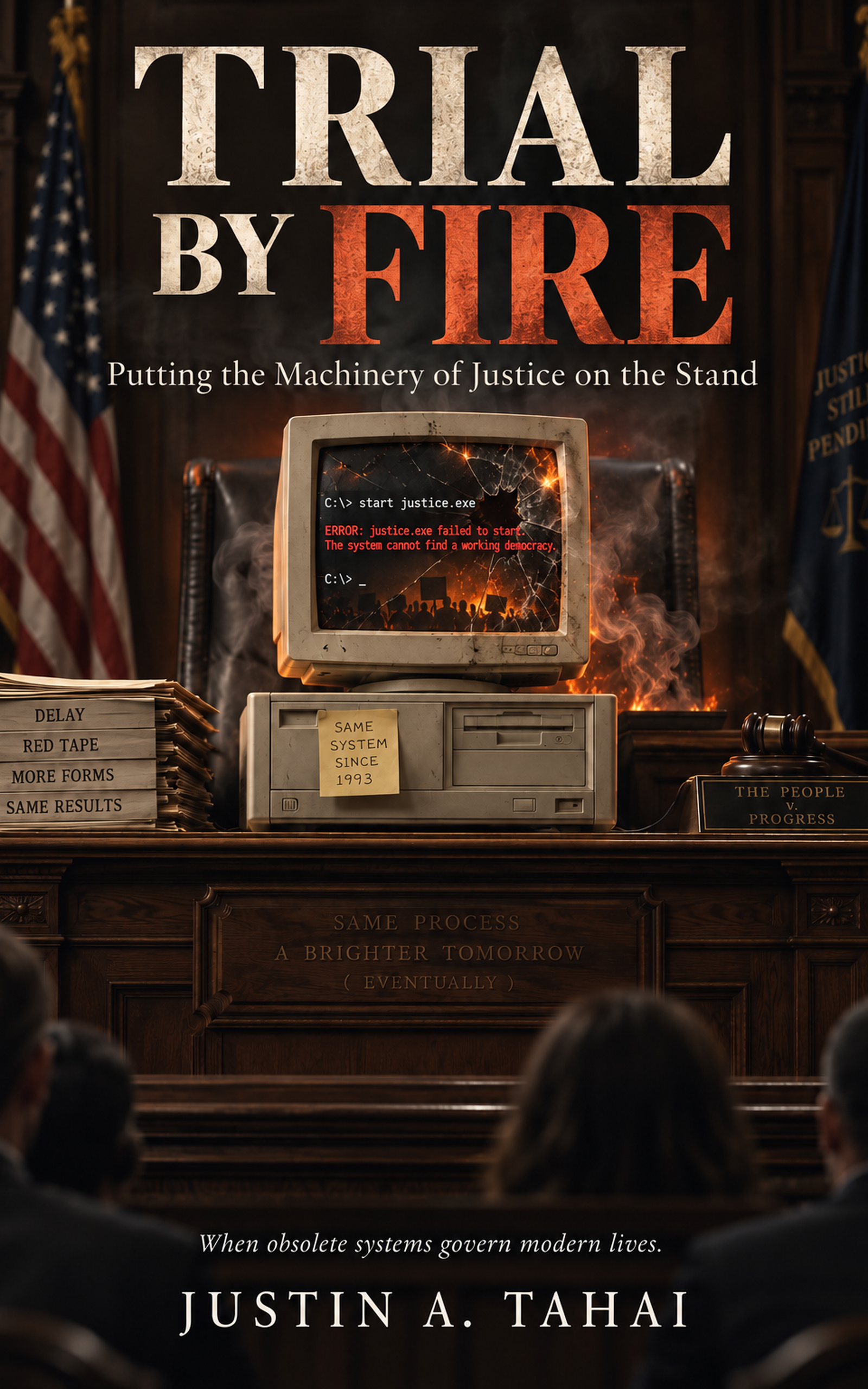
Book III / The Adversarial Test
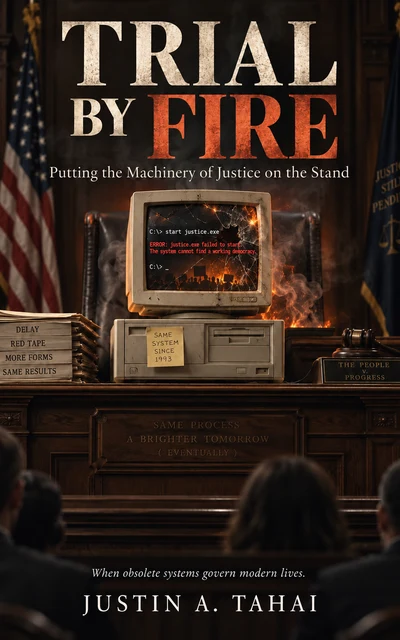
The adversarial test: put the claims beside the evidence and make the argument answer.
The reading has a companion.
Explore the three arcades, the Shoehorn of Justice, and the reading-edition bookmark on the series page.
Series 02 / Three books by Justin A. Tahai
The institutions. The profession.
The children left with the consequences.
A connected critique of institutional self-protection, professional maneuvering, and the grievances children should never have to inherit.
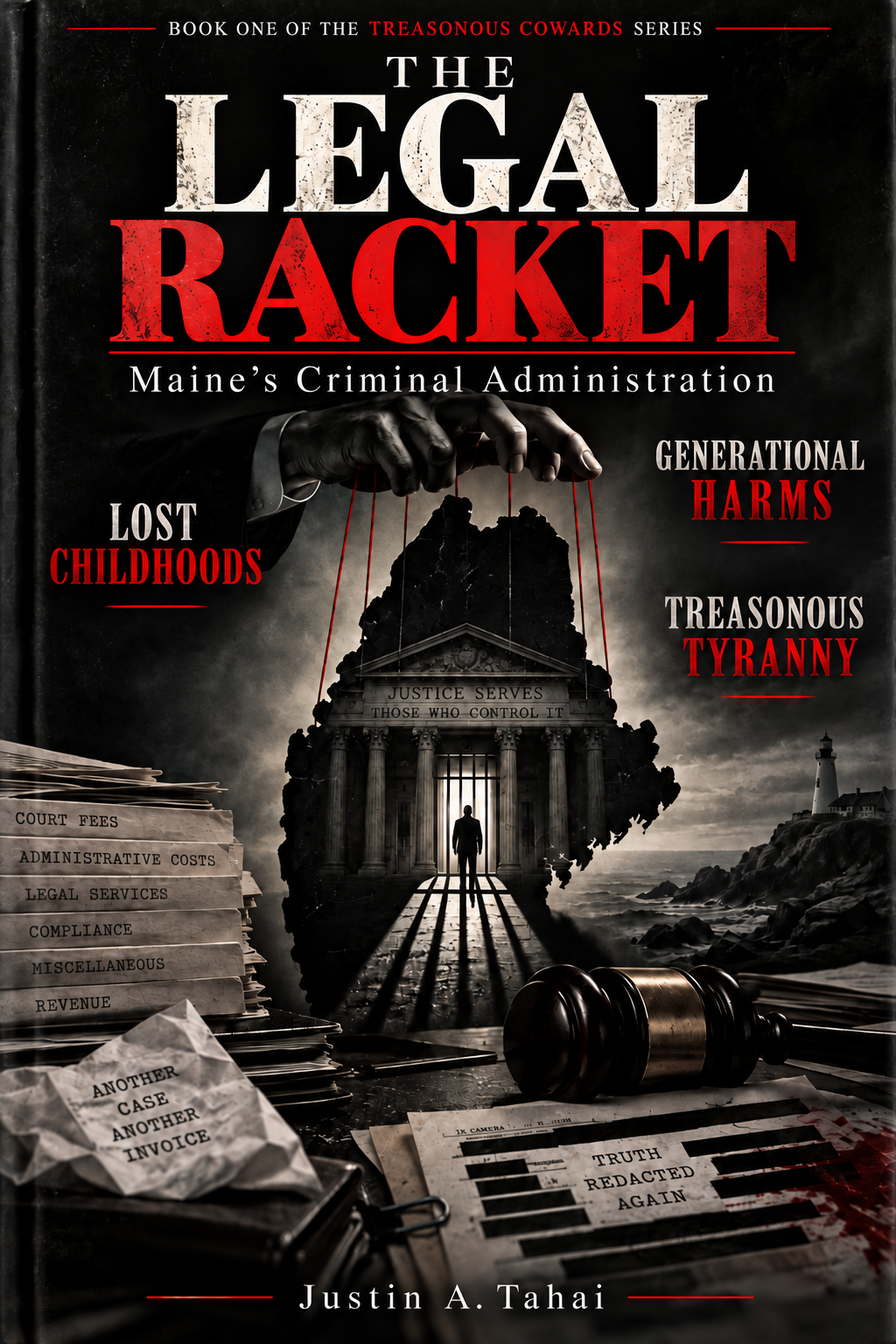
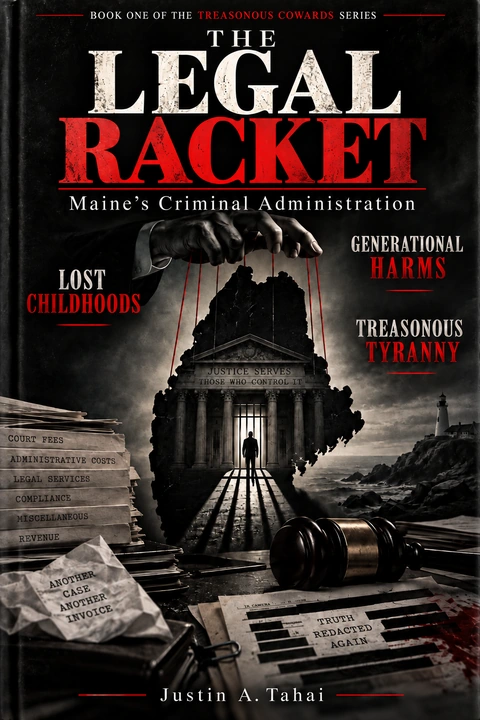
Book One / The Institutions
Maine’s Criminal Administration
Authority, administration, and the question of whom the system ultimately serves.
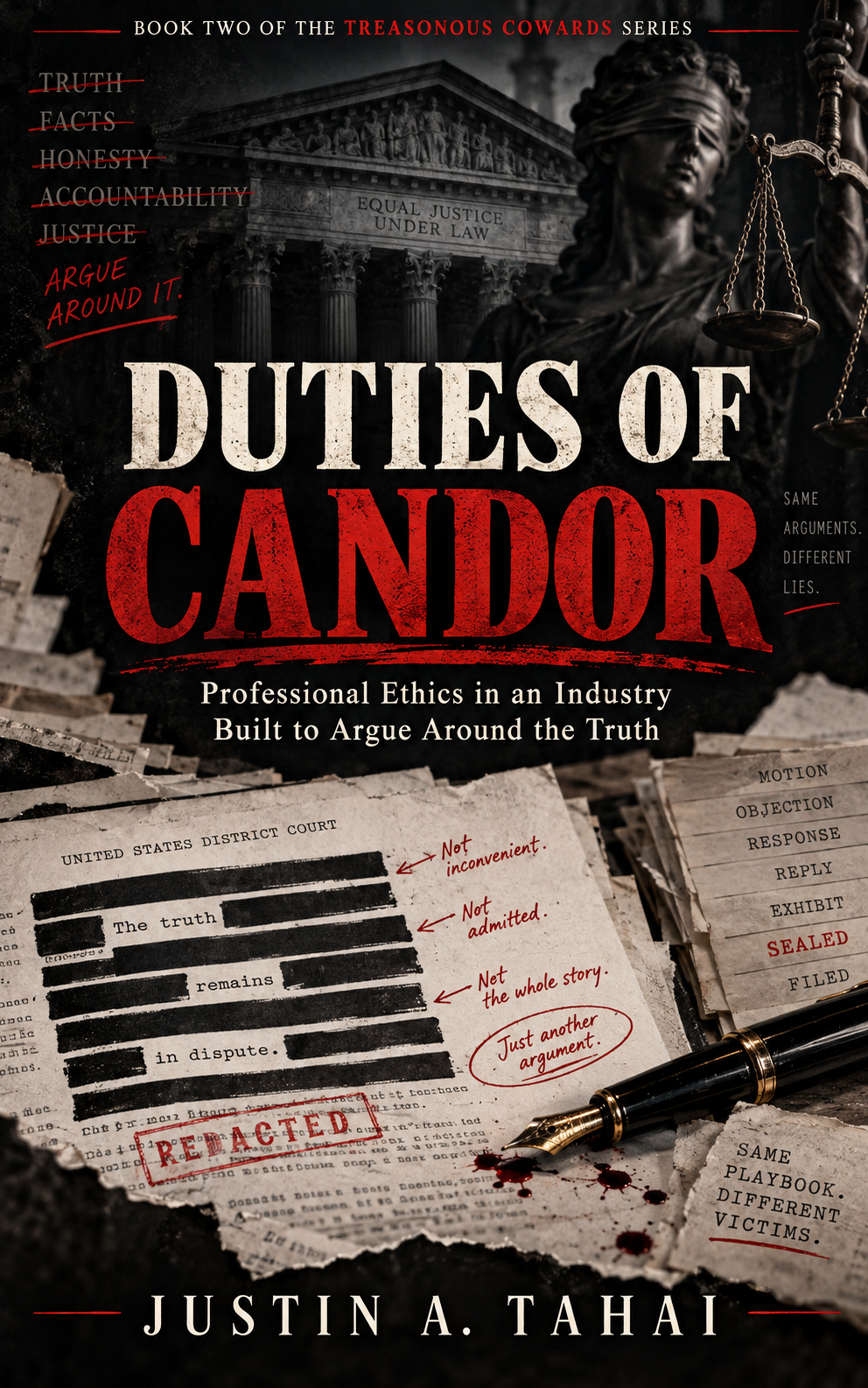
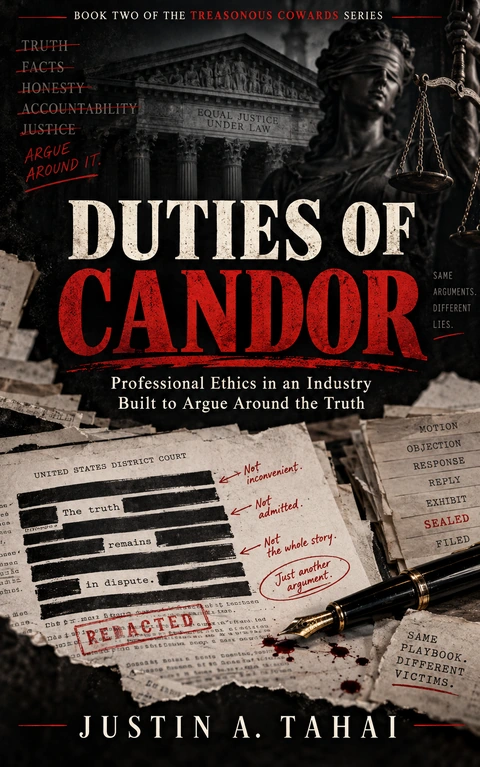
Book Two / The Profession
Professional Ethics in an Industry Built to Argue Around the Truth
Professional ethics, professional maneuvering, and the distance between them.
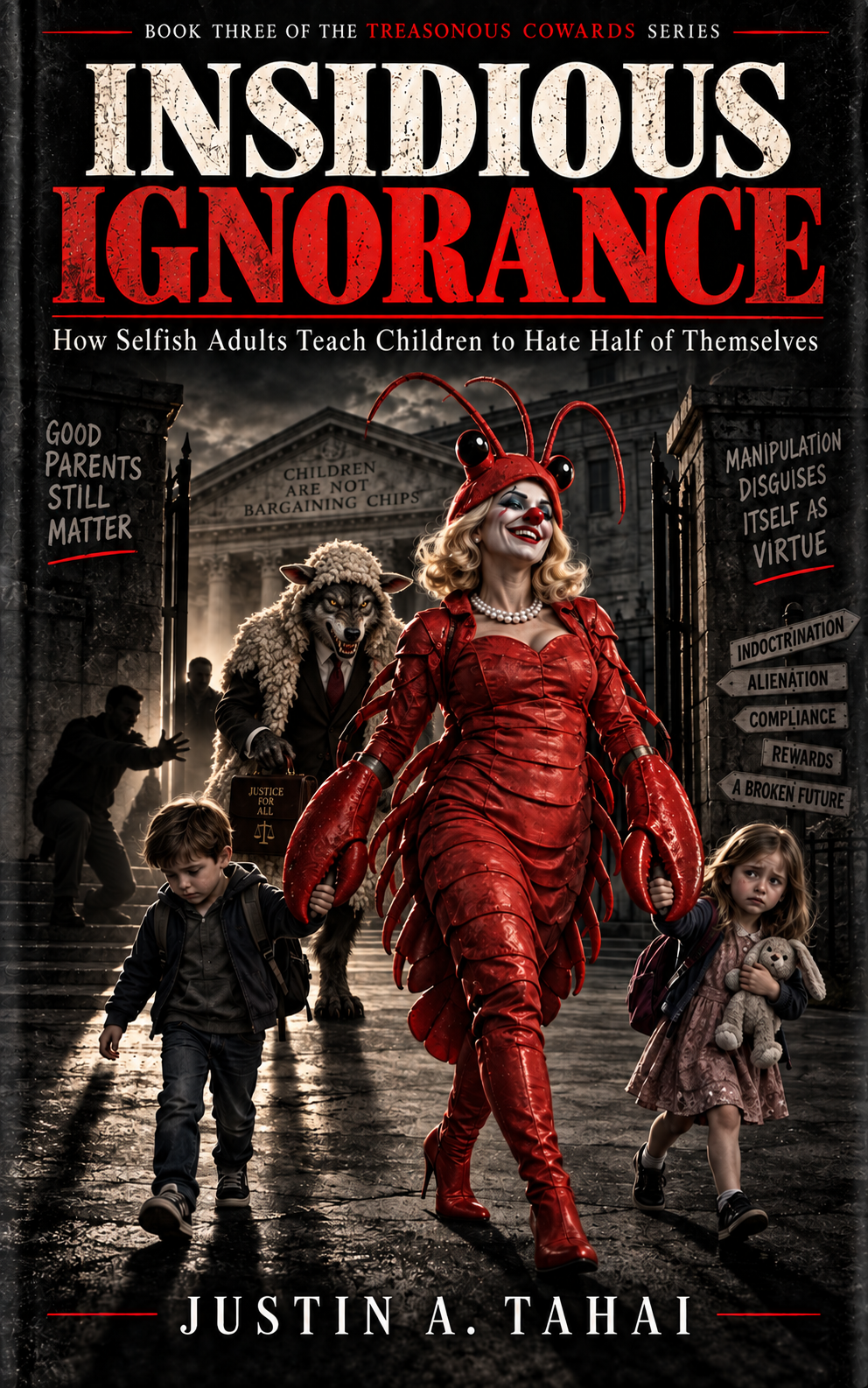
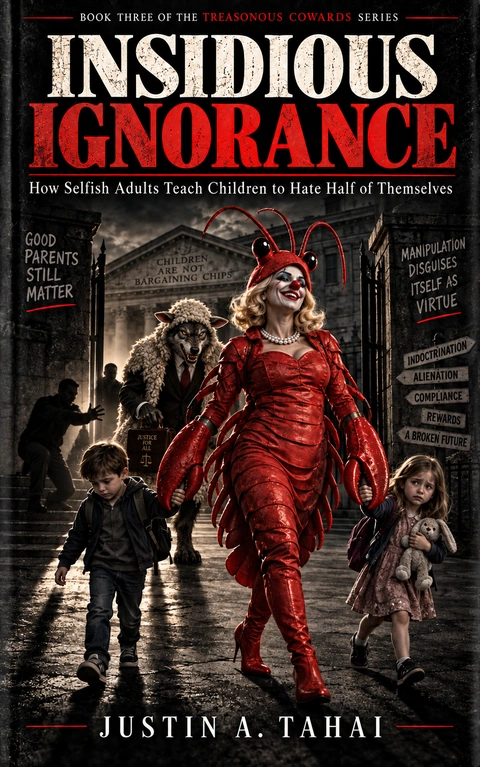
Book Three / The Children
How Selfish Adults Teach Children to Hate Half of Themselves
Children caught between adult grievances, competing narratives, and demands they should never have to carry.
Authority is not accountability. An argument is not an answer.
A child is not a bargaining chip.

Other writing / Free complete ebook
Institutional Cowardice Is Not Honorable.
A free complete book from Justin A. Tahai: documentary criticism, the source trail, adverse answers, and a call for peaceful public accountability.
About the author
Justin A. Tahai is a Maine author and IT engineer whose writing examines institutional accountability, professional responsibility, and the human consequences of systems that fail the people depending on them.
His work brings an engineer’s questions to public institutions: Where did the failure occur? What does the record establish? Who owns the correction? And how will anyone know whether the result improved?
The books bring together personal recollection, documentary material, criticism, and disputed interpretations. Those categories are not interchangeable. Readers are encouraged to examine the underlying sources and distinguish the author’s arguments from established findings.
Read the work. Examine the record.
Challenge the argument.